 TR
TR DE
DE EN
ENAqiqah is a sacrifice made for a newborn child to give thanks to Allah.
But when is Aqiqah performed, how does it differ from Nadhr and Shukr Qurbani, and who may eat its meat? We have brought all types of Qurbani together in one article, with the views of Diyanet.
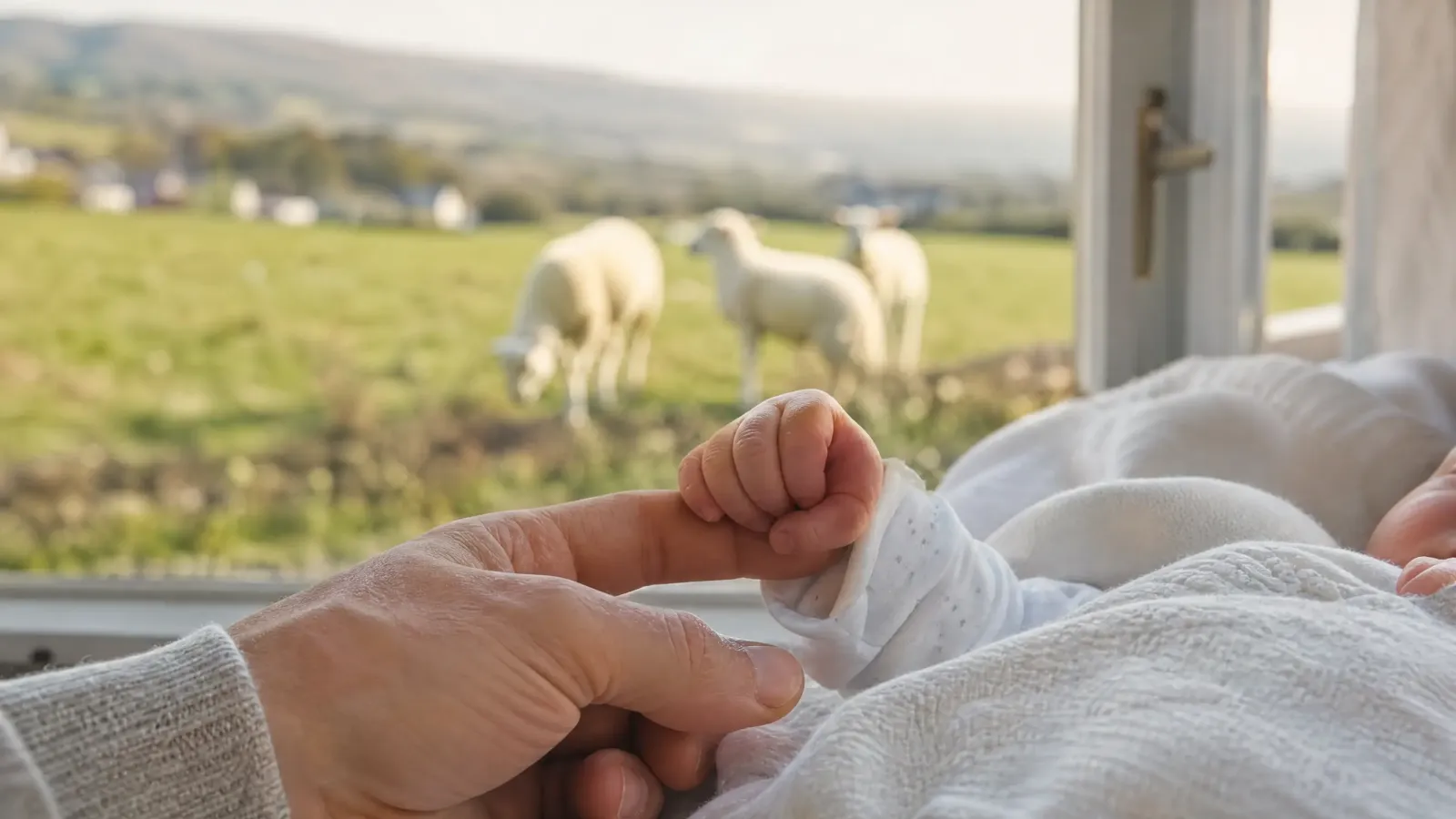
- Aqiqah is Sunnah; it is more virtuous to perform it on the 7th day after birth, and it can be performed until puberty.
- A Nadhr (vow) Qurbani becomes wajib once the vow is made; the person who made the vow, their spouse, parents, children and the wealthy may not eat its meat.
- A Shukr (thanksgiving) Qurbani is offered voluntarily for a blessing received; unless vowed, it is not obligatory.
- Nadhr, Aqiqah, thanksgiving, healing and Sadaqah sacrifices are not tied to Eid; they can be performed throughout the year.
- On the website you select the type of Qurbani in the form and enter on whose behalf it should be performed.
Types of Qurbani: a quick comparison
The sacrifice made at Eid al-Adha is called udhiyah (Wajib Qurbani). Apart from that, sacrifices are also made for other reasons.
| Type | Ruling | When? | Does the owner eat the meat? |
|---|---|---|---|
| Wajib (udhiyah) | Wajib (Hanafi) | During the days of Eid al-Adha | Yes |
| Nadhr (vow) | Wajib once vowed | As soon as possible once the vowed condition is fulfilled | No |
| Aqiqah | Circumcision | Preferably on the 7th day after birth | Yes |
| Shukr (thanksgiving) | Voluntary (nafl) | Any time | Yes |
| Healing / Sadaqah | Voluntary (nafl) | Any time | Yes |
The rulings in the table are based on the explanations in Diyanet's Qurbani booklet. In special cases, consult a religious scholar.
What is Aqiqah?
According to Diyanet, the sacrifice made for a newborn child out of gratitude is called Aqiqah.
Performing Aqiqah is Sunnah. According to narrations, the Prophet (pbuh) performed Aqiqah for his grandsons Hasan and Husayn (Abu Dawud, Dahaya, 21; Nasa'i, Aqiqah, 1).
A hadith states: “Every child is held in pledge for the Aqiqah to be sacrificed for them on the seventh day after their birth.” (Abu Dawud, Dahaya, 21)
When is Aqiqah performed?
According to Diyanet, Aqiqah can be performed from the day the child is born until puberty.
However, it is more virtuous to perform it on the seventh day after birth.
It is recommended (mustahabb) to name the child on the same day and to give gold equal to the weight of their hair, or its value, as Sadaqah.
Is there a difference in Aqiqah for girls and boys?
Some narrations mention sacrificing two sheep for a boy and one sheep for a girl.
Nevertheless, the Sunnah of Aqiqah is also fulfilled by sacrificing one small animal for each child. If in doubt, consult a religious scholar.
What is done with the meat of the Aqiqah?
Aqiqah is treated like the Wajib Qurbani: the family may eat from its meat, offer it to relatives and neighbours and distribute it to the poor.
If you have it performed abroad by proxy, the meat is distributed with your consent to families in need in the region of the slaughter.
Example scenario: a newborn baby in Graz
Example scenario: A family living in Graz has had a baby girl. The family would like the Aqiqah to be performed on the 7th day after the birth.
- Region: Qurbani in Africa, small animal 100 €
- Type of Qurbani: Aqiqah
- On whose behalf: the baby's name (the mother or father performs the Aqiqah; entering the baby's name in the form makes the intention clear)
- Payment: card, Apple Pay, EPS or PayPal — the receipt arrives by e-mail, the slaughter video by SMS
The family can also add Sadaqah equal to the weight of the baby's hair to the same basket.
Select the “Aqiqah” type in the form and enter your baby's name, so that your sacrifice reaches the tables of those in need.
Donate an AqiqahHow Do I Appoint a Proxy?What is a Nadhr (vow) Qurbani?
A Nadhr (vow) is when a person promises Allah to perform an act of worship and thereby makes it an obligation upon themselves.
According to Diyanet, a person who has vowed a Qurbani is obliged (wajib) to perform the sacrifice. If the vow is tied to a condition (“If I get a job, I will offer a sacrifice”), it is performed once the condition is fulfilled.
The Qur'an commands keeping one's promises and counts fulfilling vows among the qualities of the righteous servants (Al-Insan, 76/7).
Who may not eat the meat of a Nadhr (vow) Qurbani?
According to Diyanet, the following people may not eat the meat of a Nadhr Qurbani:
- the person who made the vow,
- their spouse,
- their ascendants (usul): mother, father, grandfathers and grandmothers,
- their descendants (furu): children and grandchildren,
- and anyone else who is wealthy in religious terms.
If one of them eats from it, the value of the meat eaten must be given to the poor. For this reason, vow meat is not served at gatherings such as weddings where wealthy people are also present.
Because all of the vow meat must be distributed to the poor, having it performed by proxy in regions of need is a practical solution.
When is a Nadhr Qurbani performed?
A Nadhr Qurbani does not have to be performed at Eid al-Adha. A conditional vow is fulfilled at the first opportunity once the condition is met; an unconditional vow may be fulfilled at any time.
However, if the person specifically vowed “I will offer a sacrifice at Eid”, it must be performed on the days of Eid.
Can money be given for a Nadhr Qurbani?
No. According to the High Council of Religious Affairs, a person who has vowed a Qurbani fulfils the vow only by slaughtering the animal.
Giving the value of the vowed sacrifice to the poor or providing aid in kind instead of performing the sacrifice does not fulfil the vow.
According to Diyanet, someone who said “I will sacrifice a ram” may also sacrifice a sheep or goat, or take a share in a large animal. Vows made in a dream, however, are not binding.
Animal requirements for a Nadhr Qurbani
According to Diyanet, the requirements for a sacrificial animal also apply to a Nadhr Qurbani.
By the lunar calendar, sheep and goats must be 1, cattle 2 and camels 5 years old. A six-month-old sheep that looks as well-developed as a one-year-old is also accepted.
The animal must be healthy with all its organs intact; blind, very thin or animals so sick that they are lame are not sacrificed.
Vows by several people for the same matter
According to Diyanet, if two people vow a Qurbani for the same matter without knowing of each other, each fulfils their vow separately.
If someone who said “If my child is born healthy, I will offer a sacrifice” has twins, it is enough to sacrifice one animal, as the vow was not specific.
What is a Shukr (thanksgiving) Qurbani?
According to Diyanet, a sacrifice made on any occasion to give thanks to Allah is called a Shukr (thanksgiving) Qurbani.
It can be offered for blessings such as getting a job, passing an exam, buying a home, recovering from an illness or a safe journey.
Unless a vow has been made, a thanksgiving Qurbani is not obligatory; the owner and their family may also eat from its meat.
Healing sacrifice and Sadaqah sacrifice
In Islamic jurisprudence, the healing sacrifice and the Sadaqah sacrifice are not separate obligatory types; both are variants of the intention of a voluntary (nafl) sacrifice.
- Healing sacrifice: a sacrifice with the intention of Sadaqah, offered for a sick loved one while asking Allah for their recovery.
- Sadaqah sacrifice: a voluntary sacrifice offered with the intention of protection from misfortune, for blessings, or to gift the reward to the soul of a loved one.
These sacrifices can also be performed throughout the year. If you vowed a Qurbani because of an illness, it now counts as a vow.
If you do not want to offer a sacrifice but would like to do good, take a look at our article Sadaqah and Sadaqah Jariyah.
Is there such a thing as a “Qurbani for the deceased”?
According to Diyanet, Qurbani is an act of worship performed by the living to draw closer to Allah; unless the deceased left a bequest, there is no separate act of worship called a “Qurbani for the deceased”.
Nevertheless, some jurists have said that a sacrifice may be offered with its reward gifted to the deceased. For a sacrifice with this intention, you can select the Sadaqah type in the form.
Can different intentions share the same large animal?
Yes. According to Diyanet, for a large animal sacrificed jointly it is enough for each shareholder to have an intention of worship; the intentions do not have to be of the same type.
For example, one shareholder may join the same large animal with the intention of the wajib sacrifice, another with a vow, another with Aqiqah and another with a voluntary sacrifice. A large animal can be divided into up to seven shares.
For large animal options, see the Africa large animal Qurbani page.
How do I select the type of Qurbani on the website?
At Austria Yetim Eli, the first step of the form in all Qurbani projects is the type of Qurbani:
- Select the type: Eid al-Adha Wajib Qurbani, Nadhr (vow), Aqiqah, Sadaqah, Healing or Shukr (thanksgiving) Qurbani.
- Enter the quantity: how many animals you want to have sacrificed.
- Enter on whose behalf: a required field used for the intention and the proxy. For several animals, you can enter a separate name for each.
- Add to basket and pay: card, Apple Pay, Google Pay, EPS or PayPal.
The slaughter video is sent via WhatsApp in Türkiye and by SMS in other regions. We explain the conditions of the proxy in our article Qurbani by proxy.
How many euros in which region?
| Region | Small animal Qurbani |
|---|---|
| Africa | 100 € |
| Yemen / Afghanistan / Asia | 150 € |
| Syria / Lebanon | 175 € |
| Palestine | 250 € (meat is delivered canned/frozen) |
| Türkiye | 250 € |
Example scenario: Nadhr and Shukr Qurbani from Vorarlberg
Example scenario: Someone living in Dornbirn vowed to offer a sacrifice if they found a job, and has now started work. They also want to offer a thanksgiving Qurbani because their child's operation went well.
- 1 × Nadhr Qurbani, Yemen: 150 € — all the meat goes to the poor
- 1 × Shukr Qurbani, Africa: 100 €
- Total: 250 €, a single payment via the basket
Don't forget your Wajib Qurbani either: Eid al-Adha 2027 is on 16–19 May. All the details are in our guide Qurbani donation from Austria 2027; you can find out whether Qurbani is obligatory for you in our article who is Qurbani obligatory for.
You can have a sacrifice performed throughout the year without waiting for Eid. Choose the type, enter the name and receive the video.
Choose the Type of Qurbani100 € in AfricaFrequently Asked Questions
Is Aqiqah obligatory (fard)?
No. According to Diyanet, Aqiqah is Sunnah; it is more virtuous to perform it on the 7th day after birth.
Up to what age can Aqiqah be performed?
According to Diyanet, it can be performed from the day the child is born until puberty.
Who may not eat the meat of a Nadhr (vow) Qurbani?
The person who made the vow, their spouse, parents, grandparents, children, grandchildren and those who are wealthy in religious terms may not eat it; the meat is given to the poor.
Can money be given instead of a Nadhr (vow) Qurbani?
No. According to the High Council of Religious Affairs, a Qurbani vow is fulfilled only by slaughtering the animal; giving its monetary value is not sufficient.
Can the meat of a Shukr (thanksgiving) Qurbani be eaten?
Yes. Unless it was vowed, the person offering a thanksgiving Qurbani and their family may eat from its meat and distribute as much as they wish.
Can Aqiqah be performed abroad?
Yes. Since Qurbani is a financial act of worship, it can be performed abroad by proxy; simply select “Aqiqah” as the type in the form.
Sources: Diyanet — Qurbani Frequently Asked Questions (PDF) · High Council of Religious Affairs — Can the value of a vowed sacrifice be given as money? · High Council of Religious Affairs — Qurbani Fatwas

Based in Innsbruck, Austria Yetim Eli is a humanitarian aid association founded under Austrian association law. The religious information in our articles is based on sources published by the Diyanet (Turkish Presidency of Religious Affairs); field information comes from the regions where our teams work. If you have any questions, write to us or reach us on WhatsApp. Who are we? · Board